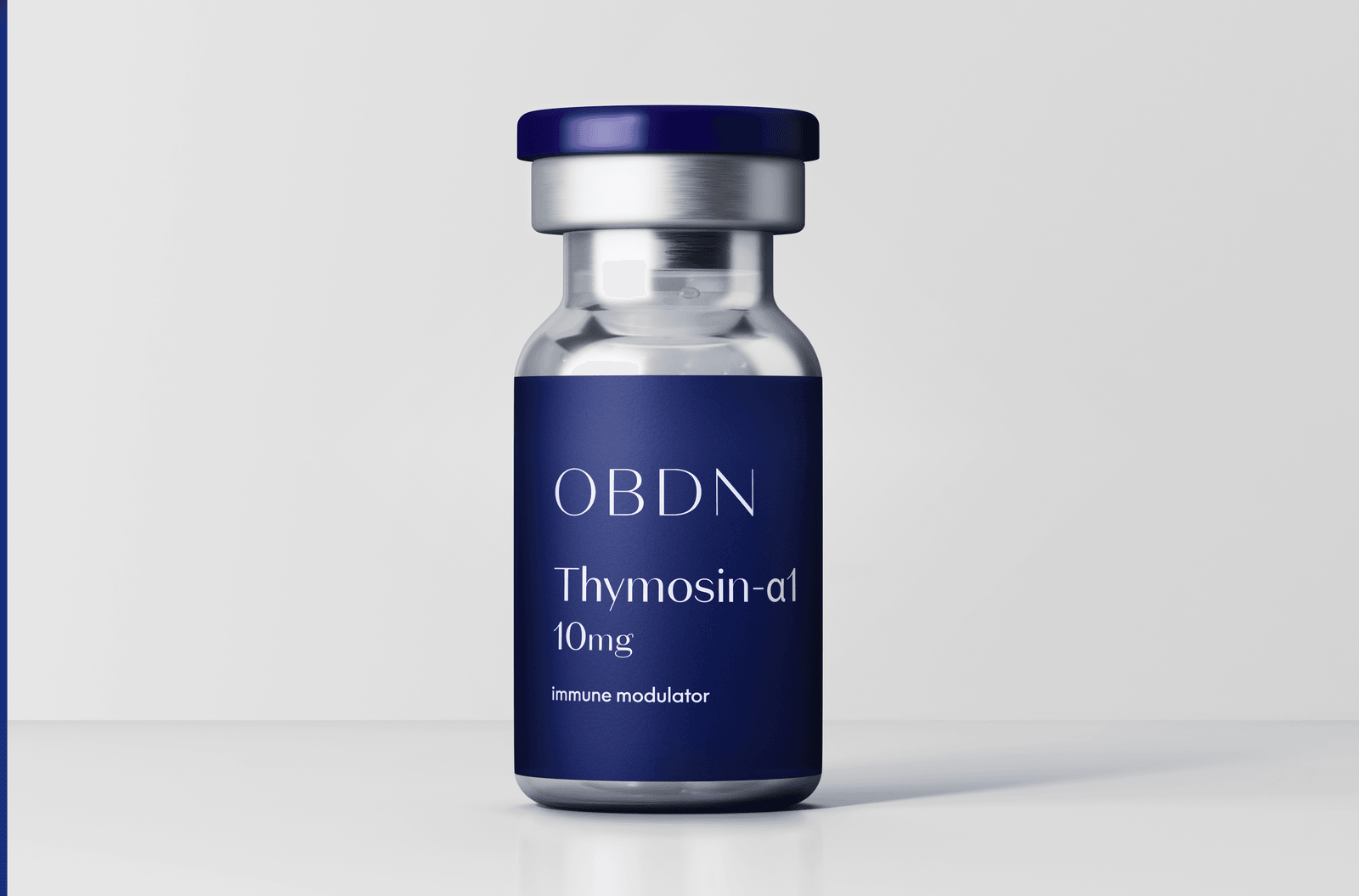
Low StockA 28-amino-acid thymic peptide that rebalances immune signaling toward regulation rather than suppression — expanding regulatory T-cells while preserving antiviral and antitumor defense.
The distinction matters: immunosuppressants dampen everything; this shifts the set-point without compromising pathogen clearance.
Marketed as Zadaxin in 35+ countries, with decades of human exposure data in chronic viral hepatitis and as a vaccine adjuvant.
Made in USA•Purity: 99% HPLC
Marketed as Zadaxin in 35+ countries; multiple RCTs and meta-analyses in chronic hepatitis B/C; decades of clinical safety data
For laboratory research use only.
Thymosin alpha-1 (TA1) rebalances an overreactive immune system. Rather than suppressing immunity, it shifts the balance — calming the cells that drive inflammation while preserving the capacity to fight infection.
The peptide comes from the thymus, the organ that trains immune cells. TA1 has been used clinically for over 40 years, marketed as Zadaxin in 35+ countries. The safety profile is well-established. The research question now is: exactly when and how does it work?
Three patterns emerge from decades of research:
Rebalancing, not boosting — TA1 shifts the immune system from aggressive attack toward measured response Timing matters — benefits appear early in disease, not in late-stage organ failure Selective effects — inflammatory signals decrease while infection-fighting capacity stays intact
Immune Rebalancing
The immune system has different modes. Some cells attack aggressively (helpful against infections, harmful in autoimmune disease). Others dampen overreaction (regulatory cells). TA1 has been shown to shift the balance toward the regulatory side.
In experimental models:
Regulatory T-cells — the immune cells that prevent overreaction — expand
Aggressive inflammatory cells decrease
The net effect is a calmer, more measured immune response
This isn't suppression. Infection-fighting capacity remains intact. The system becomes less likely to attack inappropriately. Training Immune Cells
TA1 influences how immune cells mature and communicate:
Dendritic cells — the cells that teach the immune system what to attack — become better at their job
Immature T-cells develop into functional, properly trained cells
The cells that recognize and present foreign threats (antigens) work more effectively
Selective Inflammatory Effects
TA1's effects on inflammatory signaling are selective:
IL-6 and TNF-α (proteins that drive inflammation) decrease
Interferon-gamma (a protein that fights viruses) stays the same or increases
IL-10 (a protein that calms inflammation) increases
This pattern distinguishes TA1 from drugs that broadly suppress immunity. Attack systems remain functional while the alarm volume turns down.
Chronic Viral Hepatitis
The most extensive human data comes from hepatitis B and C trials. A 2013 meta-analysis in Journal of Viral Hepatitis (doi:10.1111/jvh.12056) covering thousands of patients showed that adding TA1 to antiviral treatment was associated with higher rates of viral clearance and improved liver function markers compared to antivirals alone.
A 2014 review in International Immunopharmacology (doi:10.1016/j.intimp.2014.05.024) characterized the immunomodulatory mechanisms and clinical applications.
Typical regimens: 1.6 mg injected under the skin, twice weekly, for 3–6 months. COVID-19 Observations
During the pandemic, researchers observed timing-dependent effects:
Early disease — TA1 associated with better immune cell recovery and reduced progression to severe illness
Moderate illness — faster symptom resolution, lower inflammatory markers
ICU patients with organ failure — no consistent benefit
The pattern suggests TA1 may help when the immune system is dysregulated but still recoverable — not when damage has already become severe. Safety Record
Decades of clinical use have established a consistent safety profile. Side effects are typically mild: injection site reactions, occasional flu-like symptoms. Large reviews haven't identified serious adverse events or significant drug interactions.
TA1 has extensive human exposure data but variable clinical endpoints.
Response rates differ by disease, timing of treatment, and what other medications are used alongside. The peptide appears most useful as an add-on, not standalone treatment. The optimal window — exactly when during disease progression TA1 provides benefit — remains an active research question.
This product ships as lyophilized (freeze-dried) powder. After reconstitution, the solution requires different storage conditions than the powder.
Do not freeze. Use within 30 days of mixing.