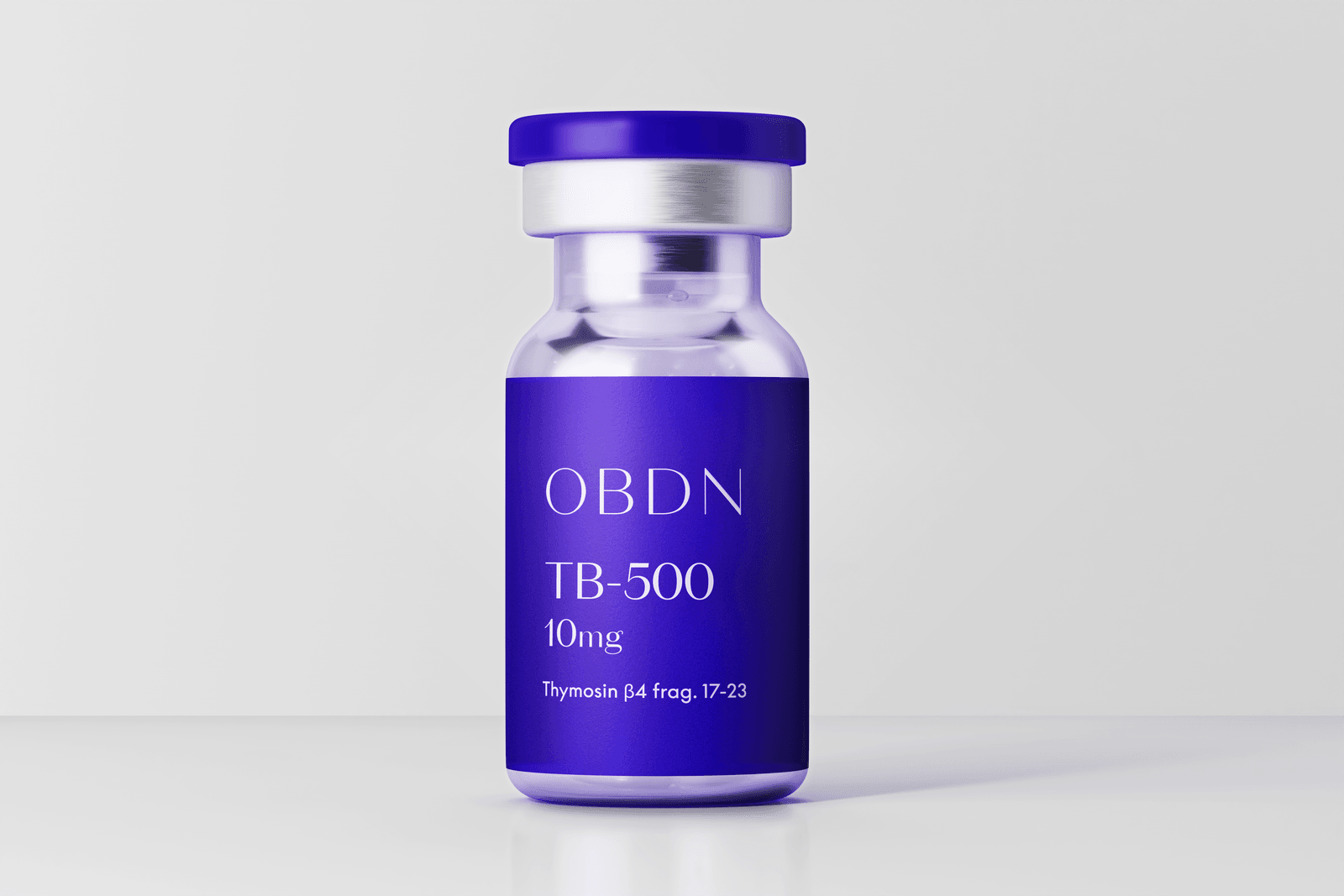
Low StockA 43-amino-acid peptide that determines how cells migrate into remodeling tissue — and whether the result is organized architecture or disorganized scar.
It maintains the reserve pool of actin that cells draw on during rapid structural change. Without adequate reserves, migration stalls or proceeds chaotically.
Thymosin Beta-4 derivatives are under clinical investigation for epithelial repair.
Made in USA•Purity: 99% HPLC
Extensive preclinical tissue repair data; Phase 2/3 corneal healing trials represent the most advanced clinical development
For laboratory research use only.
TB-500 is found wherever tissue is healing — blood platelets, wound fluid, regenerating muscle. It controls how cells move into damaged areas and whether new tissue forms organized architecture or chaotic scar.
The mechanism is actin sequestration. Actin is the structural protein that gives cells shape and lets them migrate. TB-500 maintains a reserve pool of actin building blocks, releasing them for rapid cytoskeletal remodeling when repair demands it. This positions the peptide as an orchestrator of the cellular response to injury.
Research interest spans multiple repair contexts:
Wound healing — organized tissue architecture over scarring Cardiac repair — post-infarction cell survival and regeneration Anti-fibrotic effects — reduced pathological collagen deposition Corneal healing — Phase 2/3 human trials for epithelial injury
TB-500 also influences macrophage polarization — shifting immune cells from inflammatory alarm toward tissue remodeling. This helps healing progress rather than stalling in chronic inflammation.
Wound Healing
In experimental models, TB-500 accelerated dermal wound closure, enhanced keratinocyte and endothelial cell migration, and promoted organized tissue remodeling over scar formation. Cardiac Repair
In murine myocardial ischemia models, TB-500 activated integrin-linked kinase signaling, promoted cardiac cell migration and survival, and enhanced post-infarction repair. The peptide influences epicardial progenitor cells — a population that contributes to cardiac regeneration. Neural Tissue
In spinal cord injury and diabetic neuropathy models, TB-500 modulated neural stem cell markers, reduced inflammatory signaling, and improved peripheral nerve function markers.
Corneal Healing Trials
Thymosin Beta-4 eye drops (RGN-259) have been evaluated in Phase 2 and Phase 3 clinical trials for corneal epithelial injury, neurotrophic keratopathy, and dry eye disease. Topical administration improved corneal healing, reduced inflammation, and restored ocular surface integrity in otherwise recalcitrant cases.
The cornea is avascular and immunologically privileged — conventional inflammatory healing is limited there. This highlights TB-500's direct cellular migration and organization effects.
This ophthalmic application represents the most advanced clinical development of a Thymosin Beta-4 derivative to date.
TB-500 has robust preclinical characterization. Human data are largely confined to topical ophthalmic applications.
The corneal trials provide primary human evidence, but involve topical delivery to specialized tissue. Translation of systemic effects to human physiology requires further clinical investigation.
For laboratory research use only.
| Amino Acid Sequence | Ac-Ser-Asp-Lys-Pro-Asp-Met-Ala-Glu-Ile-Glu-Lys-Phe-Asp-Lys-Ser-Lys-Leu-Lys-Lys-Thr-Glu-Thr-Gln-Glu-Lys-Asn-Pro-Leu-Pro-Ser-Lys-Glu-Thr-Ile-Glu-Gln-Glu-Lys-Gln-Ala-Gly-Glu-Ser |
|---|---|
| Single-Letter Code | SDKPDMAEIEKFDKSKLKKTETQEKNPLPSKETIEQEKQAGES |
| Molecular Formula | C212H350N56O78S |
| Molecular Weight | 4963.44 g/mol |
| Amino Acid Count | 43 |
| CAS Number | 77591-33-4 |
| PubChem CID | 16132341 |
| Origin | Synthetic peptide corresponding to the active region of Thymosin Beta-4 (TB4), a naturally occurring 43-amino acid protein involved in actin regulation |
| Synonyms | Thymosin Beta-4, TB4, Tβ4 |
This product ships as lyophilized (freeze-dried) powder. After reconstitution, the solution requires different storage conditions than the powder.
Do not freeze. Use within 30 days of mixing.