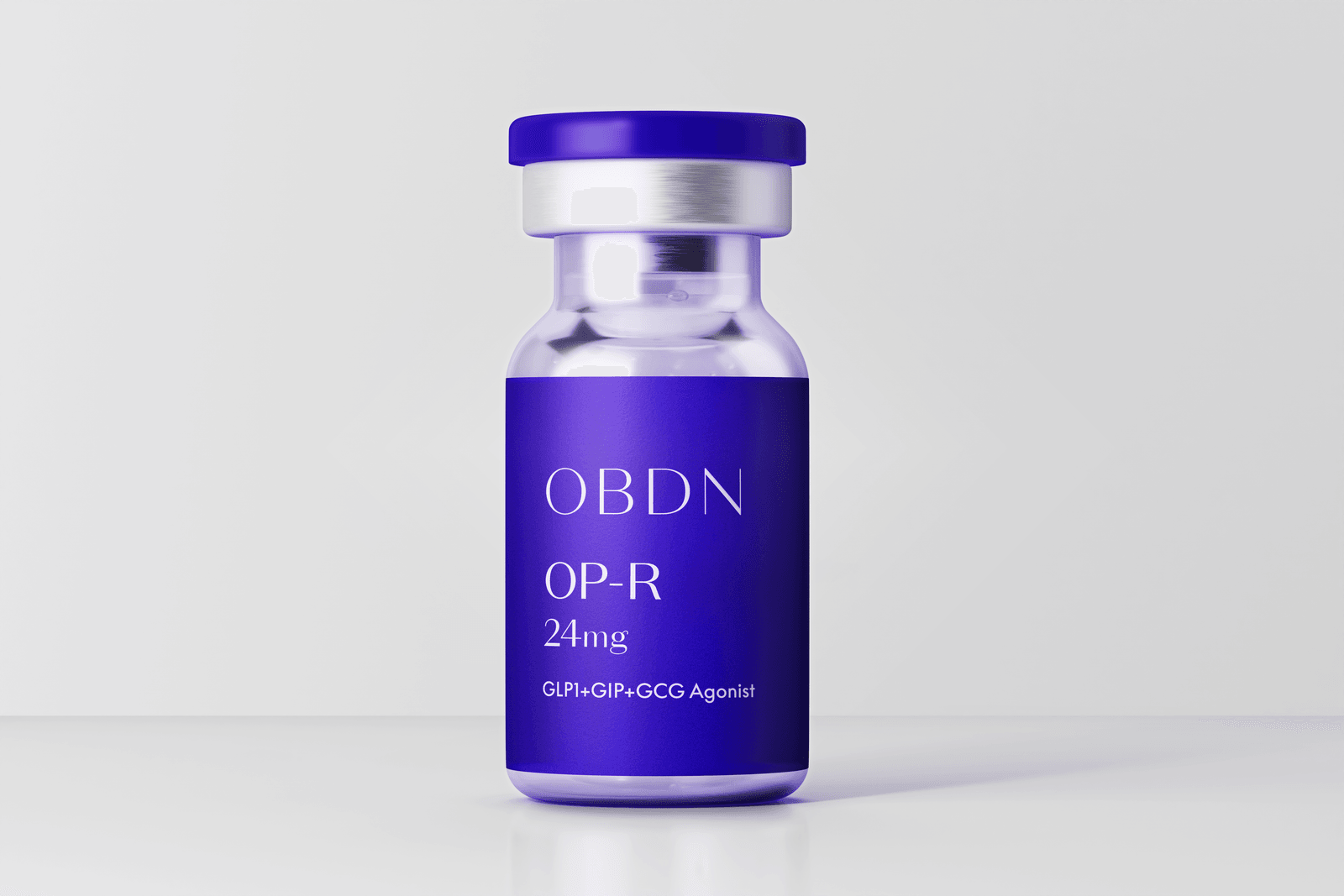
Engages GLP-1, GIP, and glucagon receptors simultaneously — the only triple-agonist in clinical development.
The glucagon arm is the key differentiator: it drives hepatic fat mobilization and maintains metabolic rate during caloric deficit, counteracting the adaptive slowdown that limits dual-agonist approaches.
Phase 2 trials showed 24% weight reduction and 86% reduction in liver fat.
Made in USA•Purity: 99% HPLC
Phase 2 RCTs demonstrating 24% weight loss and 86% liver fat reduction; Phase 3 trials in progress for obesity and MASLD indications
For laboratory research use only.
Retatrutide is a triple-agonist — a single molecule that engages three metabolic receptors simultaneously: GLP-1 (appetite regulation), GIP (insulin efficiency), and glucagon (hepatic fat mobilization). This three-pathway approach produced 24% weight loss and 86% liver fat reduction in Phase 2 trials, numbers that exceed both single-agonist (semaglutide) and dual-agonist (tirzepatide) compounds.
The glucagon pathway is the key differentiator. While GLP-1 and GIP work primarily on appetite and insulin, glucagon receptor activation drives direct fat mobilization from the liver and helps maintain metabolic rate during caloric deficit — counteracting the adaptive slowdown that typically undermines weight loss. This is both the advantage and the risk: glucagon increases energy expenditure but does not distinguish between fat and muscle without adequate anabolic support.
A 48-week trial in 338 adults with obesity (BMI 30–50) showed dose-dependent weight loss: 8.7% (1 mg), 17.3% (4 mg), 22.8% (8 mg), and 24.2% (12 mg) versus 2.1% with placebo. Gastrointestinal side effects (nausea, diarrhea) were most common during dose escalation.
In a separate 48-week trial in adults with metabolic dysfunction-associated steatotic liver disease (MASLD), the 12 mg dose produced 86% relative reduction in liver fat measured by MRI. This exceeds reductions seen with GLP-1-only (~30%) or GLP-1/GIP dual agonists (~47%). The mechanism is glucagon-driven: direct triglyceride mobilization and oxidation in the liver.
DXA analysis showed approximately 63:37 fat-to-lean mass loss ratio — meaning about 63% of weight lost came from fat, 37% from lean tissue. This was measured in people with type 2 diabetes, where GIP signaling is impaired. The ratio may be more favorable in non-diabetic populations, but that data does not yet exist. Resistance training and protein intake were not controlled in trials — variables that significantly affect lean mass preservation.
Resting heart rate increases of 2–7 bpm were observed across doses — attributed to glucagon receptor activation. This is a distinguishing safety signal compared to compounds without glucagon activity and requires monitoring in cardiovascular risk phenotypes.
All published data is Phase 2; Phase 3 trials are ongoing. Body composition data comes only from type 2 diabetes populations where GIP signaling is impaired. The 63:37 fat:lean ratio may improve in non-diabetics, but this remains untested. Heart rate increases require monitoring. The glucagon arm creates a double-edged profile: aggressive fat loss but proportional muscle loss risk without rigorous anabolic support (adequate protein, resistance training, and potentially GH-axis support). Regulatory status remains investigational (not yet FDA-approved); expected approval pending Phase 3 trial completion.
For laboratory research use only.
This product ships as lyophilized (freeze-dried) powder. After reconstitution, the solution requires different storage conditions than the powder.
Do not freeze. Use within 30 days of mixing.