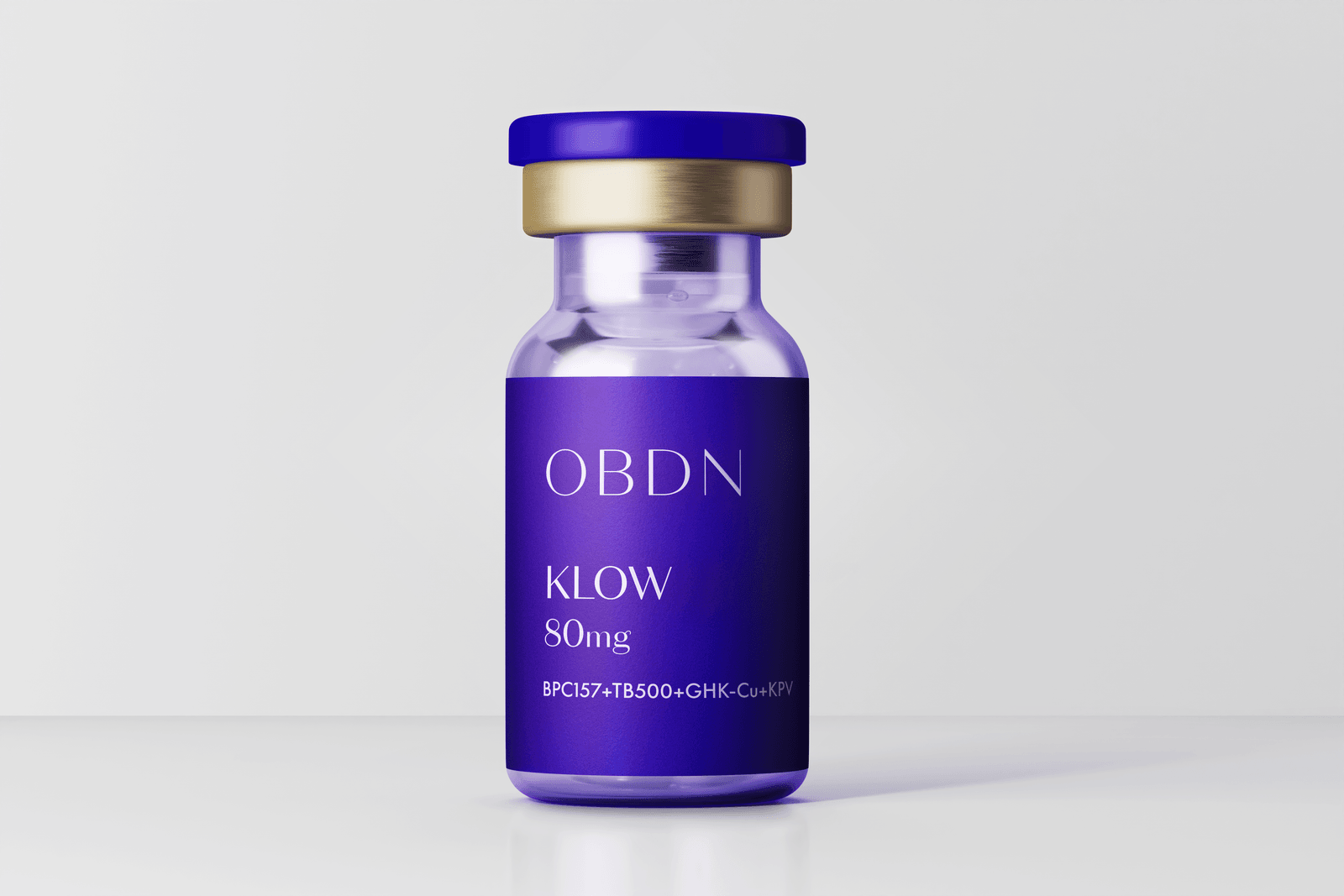
The four components of KLOW, while mechanistically distinct, converge at a shared biological endpoint: extracellular matrix remodeling and tissue architectural quality. BPC-157 has been characterized in tendon healing models as promoting organized collagen deposition, with biomechanical strength improvements and enhanced tendon-to-bone integration in rat Achilles tendon injury studies. TB-500's actin-sequestering activity influences not only cell migration into injury zones but also the spatial organization and architectural quality of deposited matrix, preventing disorganized scar formation. GHK-Cu directly stimulates collagen type I and III synthesis while modulating matrix metalloproteinases, enabling both new matrix deposition and remodeling of existing damaged tissue. KPV's NF-κB inhibition creates a tissue environment where matrix synthesis and remodeling can proceed without interference from pro-inflammatory cytokine cascades.
This convergence represents a multi-angle approach to the central challenge of tissue repair: building organized, functional tissue rather than disorganized scar. Each component influences matrix biology through a different mechanism, and their combined action has been characterized in independent studies as supporting functional tissue architecture.123
Sequential Healing Cascade and Temporal Coordination
Tissue repair proceeds through overlapping temporal phases: hemostasis and inflammation, cell migration and proliferation, matrix deposition, and remodeling. The KLOW formulation addresses each phase through peptides whose mechanisms align with specific temporal requirements. KPV's rapid NF-κB inhibition addresses the early inflammatory phase, preventing the cytokine storm that can delay or derail subsequent repair processes. In preclinical models, KPV has been shown to reduce IL-6, TNF-α, and IL-1β within hours of administration, creating a permissive environment for cellular repair responses.
BPC-157's cytoprotective signaling initiates early in the cascade, with observed effects on vascular endothelial integrity, angiogenic signaling through VEGFR2 pathways, and tight junction stabilization in barrier tissues — processes essential for establishing the vascular and structural scaffold that supports subsequent cellular activity. TB-500 operates during the migration and proliferation phase, where its actin-sequestering function enables coordinated cell movement and spatial organization. In wound healing models, TB-500 administration has been associated with enhanced keratinocyte and endothelial cell migration within 24-48 hours.
GHK-Cu's peak relevance occurs during the later remodeling phase, where its effects on lysyl oxidase activation, MMP modulation, and collagen cross-linking determine the mechanical properties and architectural quality of newly formed tissue. This temporal layering — inflammation control → barrier stabilization → cell migration → matrix remodeling — mirrors the natural sequence of tissue repair and suggests that the combination may support continuous progression through healing phases rather than stalling at inflammatory or fibrotic endpoints.4157
Anti-Inflammatory Signaling: KPV and NF-κB Pathway Modulation
KPV (Lys-Pro-Val) is a tripeptide fragment derived from the C-terminus of alpha-melanocyte-stimulating hormone (α-MSH). In preclinical models of inflammatory tissue injury, KPV has been characterized for its ability to inhibit nuclear translocation of NF-κB, a master transcription factor controlling pro-inflammatory gene expression programs. Unlike its parent molecule α-MSH, KPV does not bind melanocortin receptors, and its anti-inflammatory effects are receptor-independent and mediated through direct inhibition of NF-κB nuclear entry.
In experimental colitis models, oral and nanoparticle-delivered KPV has been shown to reduce inflammatory cytokine expression (IL-6, TNF-α, IL-1β), decrease disease activity indices, and improve histological markers of intestinal inflammation. In dermatological models, KPV has demonstrated efficacy in suppressing contact dermatitis and protecting keratinocytes against oxidative stress-induced inflammation. The peptide's anti-inflammatory profile includes downregulation of COX-2 and iNOS expression, key inflammatory mediators in tissue damage contexts.
A critical consideration for the KLOW formulation is route of administration: preclinical gut-related KPV evidence relies on oral delivery enabling direct contact with intestinal epithelium and uptake via the PepT1 transporter, which is upregulated in inflamed intestinal tissue. Subcutaneous administration, as used for KLOW, delivers KPV systemically rather than locally to intestinal surfaces, and evidence for systemic anti-inflammatory effects at subcutaneous dosing remains limited to indirect observations in practice-level contexts.49
Cytoprotective and Angiogenic Signaling: BPC-157
BPC-157 is a synthetic pentadecapeptide derived from Body Protection Compound isolated from human gastric juice. In preclinical models, BPC-157 has been characterized for broad cytoprotective properties across gastrointestinal, musculoskeletal, vascular, and neural tissue systems. The peptide's mechanisms include modulation of VEGFR2-associated angiogenic signaling, bidirectional regulation of nitric oxide pathways, and focal adhesion kinase (FAK)-paxillin cytoskeletal dynamics.
In musculoskeletal injury models, BPC-157 administration has been associated with accelerated tendon healing, enhanced collagen deposition, improved biomechanical strength, and reduced fibrotic adhesion formation. In vascular injury models, BPC-157 promotes endothelial cell migration, tube formation, and restoration of vascular integrity following diverse insults. The peptide's angiogenic effects are particularly relevant in tissue repair contexts where sustained vascular support is required for metabolic activity during remodeling phases.
BPC-157's cytoprotective effects on barrier tissues — including gastrointestinal mucosa and vascular endothelium — position it as a stabilizing component within the KLOW formulation, providing protective signaling that prevents ongoing damage while repair processes are initiated by other components.18
Actin Regulation and Cell Migration: TB-500
TB-500 is a synthetic 43-amino acid peptide corresponding to the active region of Thymosin Beta-4 (Tβ4), one of the most abundant peptides in the human body and a principal regulator of actin dynamics. Tβ4 functions by sequestering G-actin monomers, maintaining a reservoir of unpolymerized actin available for rapid cytoskeletal remodeling during cell migration and tissue organization processes. This actin-binding mechanism represents a fundamental control point in cellular responses to injury.
In experimental wound healing models, TB-500 administration has been associated with accelerated dermal wound closure, enhanced directional cell migration, and organized tissue remodeling rather than disorganized scar formation. The peptide influences the transition from inflammatory to proliferative healing phases, facilitating the spatial choreography required for functional tissue architecture. Beyond structural repair, TB-500 exhibits anti-fibrotic properties: in cardiac, hepatic, and renal fibrosis models, TB-500 treatment has been associated with reduced collagen deposition and attenuation of pathologic scar formation, likely through modulation of TGF-β signaling.
In the KLOW formulation, TB-500 provides the migratory and organizational machinery that translates protective and anti-inflammatory signals (from BPC-157 and KPV) into coordinated cellular action within injury zones. Its anti-fibrotic properties complement GHK-Cu's matrix remodeling effects, potentially preventing the fibrotic endpoints that characterize failed healing responses.265
Extracellular Matrix Remodeling and Gene Regulation: GHK-Cu
GHK-Cu is a naturally occurring copper-binding tripeptide first isolated from human plasma in 1973, whose circulating levels decline with age — from approximately 200 μg/mL at age 20 to 80 μg/mL by age 60 in observational cohort studies. GHK-Cu has been characterized in preclinical research for its effects on collagen synthesis, lysyl oxidase activation, matrix metalloproteinase modulation, and broad gene regulatory network modulation across thousands of genes associated with tissue remodeling and antioxidant defense.
A distinguishing feature of GHK-Cu is its bidirectional influence on matrix metalloproteinases (MMPs): the peptide upregulates degradation of damaged or disorganized matrix while simultaneously promoting synthesis and organized deposition of new collagen. This balanced regulation enables remodeling of existing scar tissue rather than mere addition of new collagen. The copper component acts as a cofactor for lysyl oxidase, the enzyme catalyzing collagen and elastin cross-linking, determining mechanical properties and structural integrity of the matrix.
Microarray analyses have shown that GHK-Cu modulates expression of over 4,000 human genes, shifting cellular programs from inflammatory damage states toward regenerative states. Gene ontology analyses reveal upregulation of tissue remodeling and wound healing genes alongside downregulation of inflammatory damage and fibrosis genes. In the KLOW formulation, GHK-Cu represents the matrix quality control component, ensuring that newly deposited tissue has appropriate architectural organization and mechanical properties rather than accumulating as disorganized scar.3710
Integrated Anti-Inflammatory Mechanisms
While KPV provides direct NF-κB pathway inhibition, the KLOW formulation includes additional anti-inflammatory mechanisms through its other components. GHK-Cu has been shown in macrophage culture systems to reduce pro-inflammatory cytokine secretion (IL-6, TNF-α) and modulate oxidative stress through superoxide dismutase and ferritin pathways. TB-500 influences macrophage polarization, promoting a shift from pro-inflammatory M1 phenotype toward tissue-remodeling M2 phenotype, and reduces inflammatory cytokine expression in experimental models.
BPC-157, while primarily characterized for cytoprotective and angiogenic effects, demonstrates inflammatory modulation in experimental contexts, including reduced inflammatory cytokine expression in gastrointestinal and musculoskeletal injury models. This multi-component anti-inflammatory architecture creates redundancy: if one pathway is insufficient or non-responsive in a particular tissue context, other mechanisms provide compensatory anti-inflammatory signaling.
The integrated effect is proposed to create a tissue environment where inflammatory signaling is suppressed from multiple angles — transcriptional (NF-κB inhibition), cellular phenotype (macrophage polarization), and oxidative stress pathways — enabling repair processes to proceed without interference from chronic inflammatory states.112
Subcutaneous Administration and Systemic Bioavailability Considerations
The KLOW formulation is administered via subcutaneous injection, providing systemic delivery of all four peptide components. This route bypasses gastrointestinal degradation and first-pass hepatic metabolism, enabling direct entry into systemic circulation. For BPC-157, TB-500, and GHK-Cu, systemic delivery has been characterized in preclinical models as enabling broad tissue distribution and effects distant from injection sites, supporting the formulation's applicability to systemic tissue repair contexts.
For KPV specifically, route considerations are particularly relevant. Preclinical evidence demonstrating KPV's effects on intestinal inflammation relies on oral delivery or nanoparticle formulations that enable direct contact with intestinal epithelium and uptake via the PepT1 transporter, which is upregulated in inflamed gut tissue. Subcutaneous delivery provides systemic KPV distribution but does not deliver the peptide to intestinal luminal surfaces where PepT1-mediated uptake would occur.
This pharmacokinetic distinction suggests that while subcutaneous KLOW may provide systemic anti-inflammatory effects through NF-κB modulation in tissues accessible via systemic circulation, its applicability to gut-specific inflammation may be limited compared to oral KPV formulations. The absence of user-reported gut health improvements with injectable KLOW in practice-level observations aligns with this route-dependent bioavailability constraint.9
Preclinical Safety Profiles of Component Peptides
The individual components of KLOW have been characterized for safety in preclinical toxicology studies. BPC-157 has demonstrated excellent safety profiles across wide dose ranges and administration routes in animal models, with no significant toxicity signals at doses substantially exceeding efficacy study doses. TB-500 and its parent molecule Tβ4 have been evaluated in preclinical and clinical contexts (including Phase 2/3 ophthalmic trials for corneal healing), with acceptable tolerability profiles and no serious adverse events attributed to the peptide in controlled settings.
GHK-Cu has been evaluated in both preclinical and human dermatological studies, including controlled cosmetic trials, with minimal adverse effects beyond occasional injection site reactions in injectable formulations. KPV's preclinical toxicology studies in rodents failed to identify a median lethal dose (LD50) at doses up to 100 mg/kg, representing substantial safety margins over therapeutic doses used in efficacy studies.
However, none of these safety evaluations examined the four-peptide combination as formulated in KLOW, and no controlled clinical trials have evaluated the blend's safety or efficacy in human subjects. Concurrent administration of multiple bioactive peptides with overlapping mechanisms (particularly the angiogenic effects of BPC-157, TB-500, and GHK-Cu) introduces theoretical considerations regarding sustained angiogenesis and vascular growth, leading to common recommendations for cycling protocols (6-8 weeks on, 6-8 weeks off) in practice-level use. These cycling recommendations are based on theoretical risk mitigation rather than documented adverse events.1213
 Low Stock