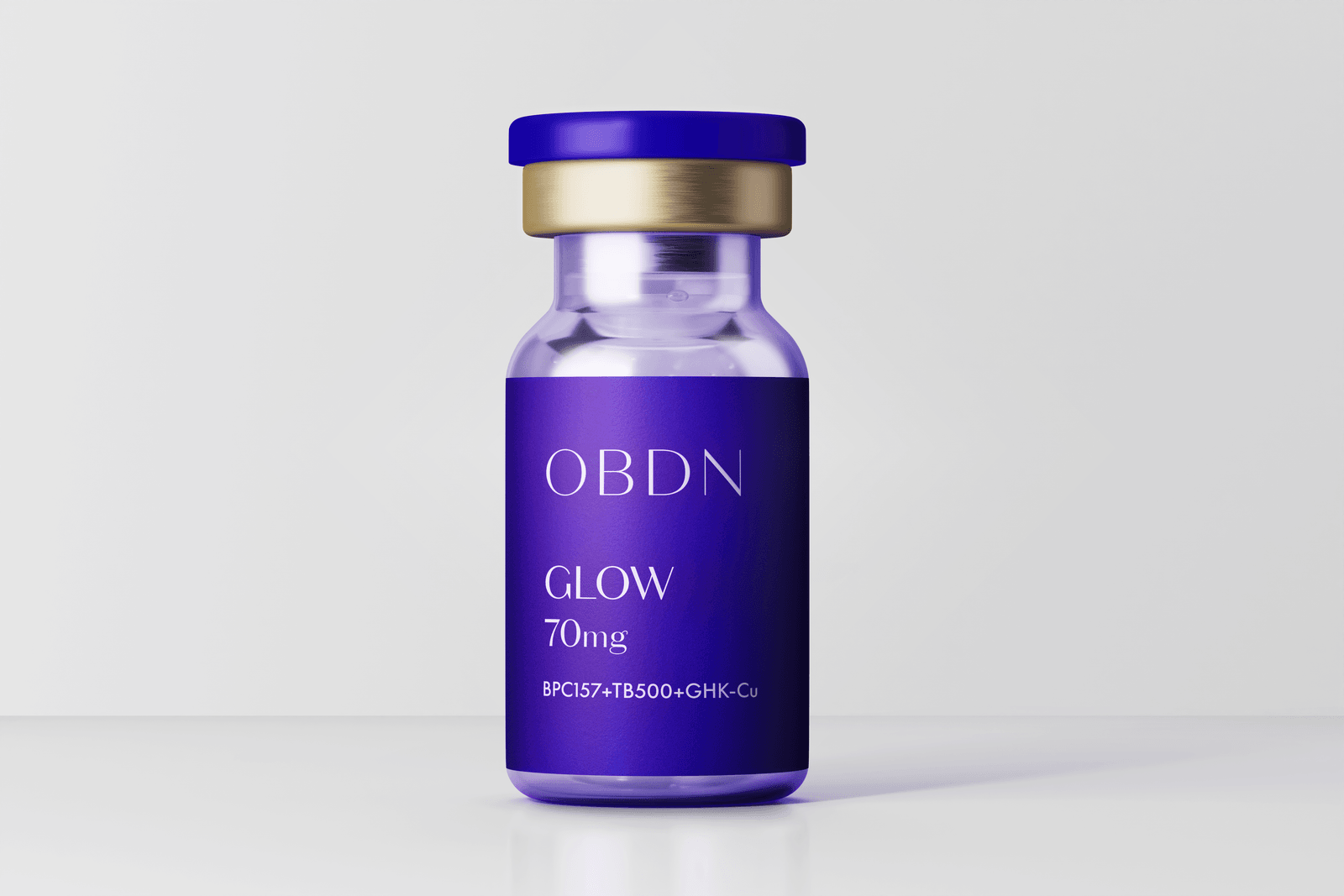
The three components of GLOW, while mechanistically distinct, converge at a shared biological endpoint: extracellular matrix architecture and dermal tissue quality. BPC-157 has been characterized in wound healing models as promoting organized collagen deposition and vascular endothelial integrity through VEGFR2-associated signaling. TB-500's actin-sequestering activity influences cell migration into injury zones and the spatial organization of deposited matrix. GHK-Cu directly stimulates collagen type I and III synthesis while modulating matrix metalloproteinases — the enzymes that break down and remodel existing matrix — enabling both new matrix deposition and architectural refinement of damaged tissue.
This convergence represents a multi-angle approach to extracellular matrix quality: vascular support to sustain metabolically active tissue, cellular machinery for organized migration and positioning, and direct biosynthetic stimulation of structural proteins.
Cytoprotective and Angiogenic Signaling: BPC-157
BPC-157 is a synthetic pentadecapeptide derived from a protein isolated from human gastric juice. In preclinical models, BPC-157 has been characterized for cytoprotective properties across gastrointestinal, musculoskeletal, and vascular tissue systems. The peptide's mechanisms include modulation of VEGFR2-associated angiogenic signaling — the receptor pathway through which new blood vessel formation is initiated.
In dermal and wound healing models, BPC-157 administration has been associated with accelerated wound closure, enhanced collagen deposition, and improved vascularization of healing tissue. The peptide's angiogenic effects are particularly relevant in contexts where sustained vascular support is required for metabolic activity during matrix synthesis and remodeling.
Actin Regulation and Cell Migration: TB-500
TB-500 is a synthetic 43-amino acid peptide corresponding to the active region of Thymosin Beta-4 (Tβ4), one of the most abundant peptides in the human body and a principal regulator of actin dynamics. Tβ4 functions by sequestering G-actin monomers — the unpolymerized building blocks of the cellular skeleton — maintaining a reservoir available for rapid cytoskeletal remodeling during cell migration and tissue organization.
In experimental wound healing models, TB-500 administration has been associated with accelerated dermal wound closure, enhanced directional cell migration, and organized tissue remodeling. The peptide influences spatial organization during matrix deposition.
GHK-Cu is a naturally occurring copper-binding tripeptide first isolated from human plasma in 1973, whose circulating levels decline with age — from approximately 200 μg/mL at age 20 to 80 μg/mL by age 60 in observational studies. GHK-Cu has been characterized in preclinical research for its effects on collagen synthesis, lysyl oxidase activation — the enzyme that cross-links collagen and elastin fibers — and matrix metalloproteinase modulation.
A distinguishing feature of GHK-Cu is its bidirectional influence on matrix metalloproteinases: the peptide has been shown to upregulate degradation of damaged or disorganized matrix while simultaneously promoting synthesis and organized deposition of new collagen. This balanced regulation enables remodeling of existing tissue rather than mere addition of new collagen onto damaged substrate. The copper component acts as a cofactor for lysyl oxidase, determining mechanical properties and structural integrity of the resulting matrix.
Microarray analyses have shown that GHK-Cu modulates expression of over 4,000 human genes, with gene ontology analyses revealing upregulation of tissue remodeling and wound healing genes alongside downregulation of inflammatory damage genes.
Integrated Angiogenic Support
All three components of GLOW have been independently characterized for effects on vascular biology, though through distinct mechanisms. BPC-157 promotes angiogenesis through VEGFR2 signaling. TB-500 enhances endothelial cell migration — the directional movement of blood vessel-forming cells. GHK-Cu has been associated with capillary density increases and vascular stabilization in wound models.
This multi-pathway vascular support is relevant to dermal tissue quality: sustained blood supply ensures oxygen and nutrient delivery to metabolically active cells synthesizing new matrix, and determines long-term tissue viability.
Preclinical Safety Profiles
The individual components of GLOW have been characterized for safety in preclinical toxicology studies. BPC-157 has demonstrated acceptable safety profiles across wide dose ranges in animal models. TB-500 and its parent molecule Tβ4 have been evaluated in preclinical and clinical contexts — including Phase 2/3 ophthalmic trials for corneal healing — with acceptable tolerability. GHK-Cu has been evaluated in both preclinical and human dermatological studies, including controlled cosmetic trials, with minimal adverse effects beyond occasional injection site reactions.
However, no controlled clinical trials have evaluated the three-peptide combination as formulated in GLOW. Concurrent administration of multiple peptides with angiogenic effects (BPC-157, TB-500, and GHK-Cu) has led to recommendations for cycling protocols in practice-level use, based on theoretical considerations rather than documented adverse events.
 Coming Soon