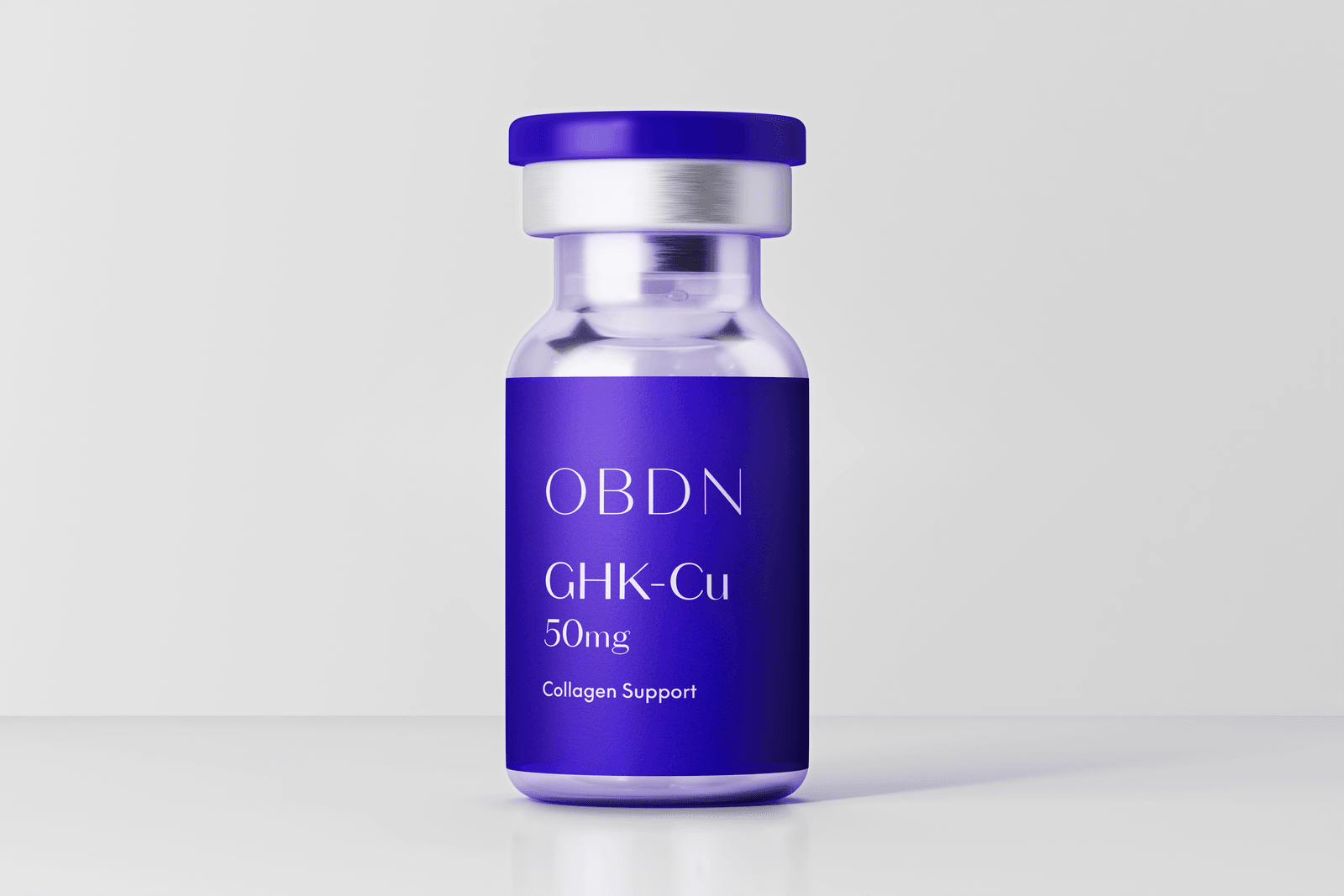
Low StockA copper-binding tripeptide that shifts gene expression toward tissue maintenance and repair — influencing over 4,000 human genes in transcriptomic studies.
The copper it carries serves as a cofactor for the enzymes that cross-link collagen, determining the mechanical strength of newly formed matrix.
Circulating levels fall by more than half between age 20 and 60.
Made in USA•Purity: 99% HPLC
Extensive preclinical gene expression and wound healing data; human evidence limited to cosmetic dermatology studies
For laboratory research use only.
GHK-Cu declines with age. Plasma levels drop from ~200 μg/mL at age 20 to ~80 μg/mL by age 60 — a 60% reduction that correlates with slower wound healing and reduced tissue repair capacity.
The peptide is a copper-delivery complex that modulates gene expression on a massive scale. Microarray studies show GHK-Cu influencing over 4,000 human genes — shifting cellular programs from defense-oriented states toward tissue maintenance. This is not a single-target molecule; it's a gene regulatory network modulator.
What makes GHK-Cu distinctive in the collagen space:
Quality, not just quantity — copper activates lysyl oxidase, which cross-links collagen fibers for mechanical strength Matrix remodeling — degrades damaged tissue while building organized replacement Anti-inflammatory — suppresses IL-6, TNF-α, and oxidative stress markers Cross-tissue effects — similar gene patterns in skin, lung, and other tissues
The age-related decline in circulating GHK-Cu may represent a fundamental shift in tissue maintenance capacity.
Collagen Synthesis
In dermal fibroblast cultures, GHK-Cu stimulated synthesis of collagen types I and III, decorin, and glycosaminoglycans. Quantitative assays measured increased hydroxyproline and procollagen peptide levels. Wound Healing
In rodent full-thickness wound and burn models, GHK-Cu accelerated wound contraction, enhanced angiogenesis, and increased microvessel density in healing tissue. Anti-Inflammatory Effects
In macrophage cultures, GHK-Cu reduced secretion of IL-6 and TNF-α. The peptide also influenced superoxide dismutase and ferritin heavy chain expression — suggesting coordinated regulation of inflammatory signaling and oxidative stress. Gene Expression in COPD
GHK-Cu's gene regulatory effects extend beyond skin. In COPD lung tissue, microarray studies show similar patterns — hundreds of genes involved in remodeling, inflammation, and matrix organization responding to the peptide.
Cosmetic Dermatology
Clinical studies have evaluated topical GHK-Cu on skin architecture. Histological analyses documented changes in collagen organization and dermal density. Quantitative measures of wrinkle depth and skin elasticity showed improvements versus placebo.
These cosmetic trials provide the primary human data supporting GHK-Cu's effects on tissue quality.
GHK-Cu has well-characterized mechanisms and robust preclinical evidence. Human data are largely confined to topical cosmetic applications.
The age-related decline in circulating GHK-Cu has been documented. Whether supplementation reverses age-associated tissue changes in humans has not been established through rigorous clinical trials.
For laboratory research use only.
| Amino Acid Sequence | Gly-His-Lys |
|---|---|
| Single-Letter Code | GHK |
| Molecular Formula | C14H22CuN6O4 |
| Molecular Weight | 401.93 g/mol |
| Amino Acid Count | 3 |
| CAS Number | 49557-75-7 |
| PubChem CID | 73587 |
| Origin | Naturally occurring copper-binding tripeptide (glycyl-L-histidyl-L-lysine) first isolated from human plasma, forming a high-affinity complex with copper(II) ions that modulates extracellular matrix remodeling and gene expression |
| Synonyms | Copper Peptide, GHK-Cu, Glycyl-L-histidyl-L-lysine:copper(II), Lamin, Prezatide copper acetate |
This product ships as lyophilized (freeze-dried) powder. After reconstitution, the solution requires different storage conditions than the powder.
Do not freeze. Use within 30 days of mixing.