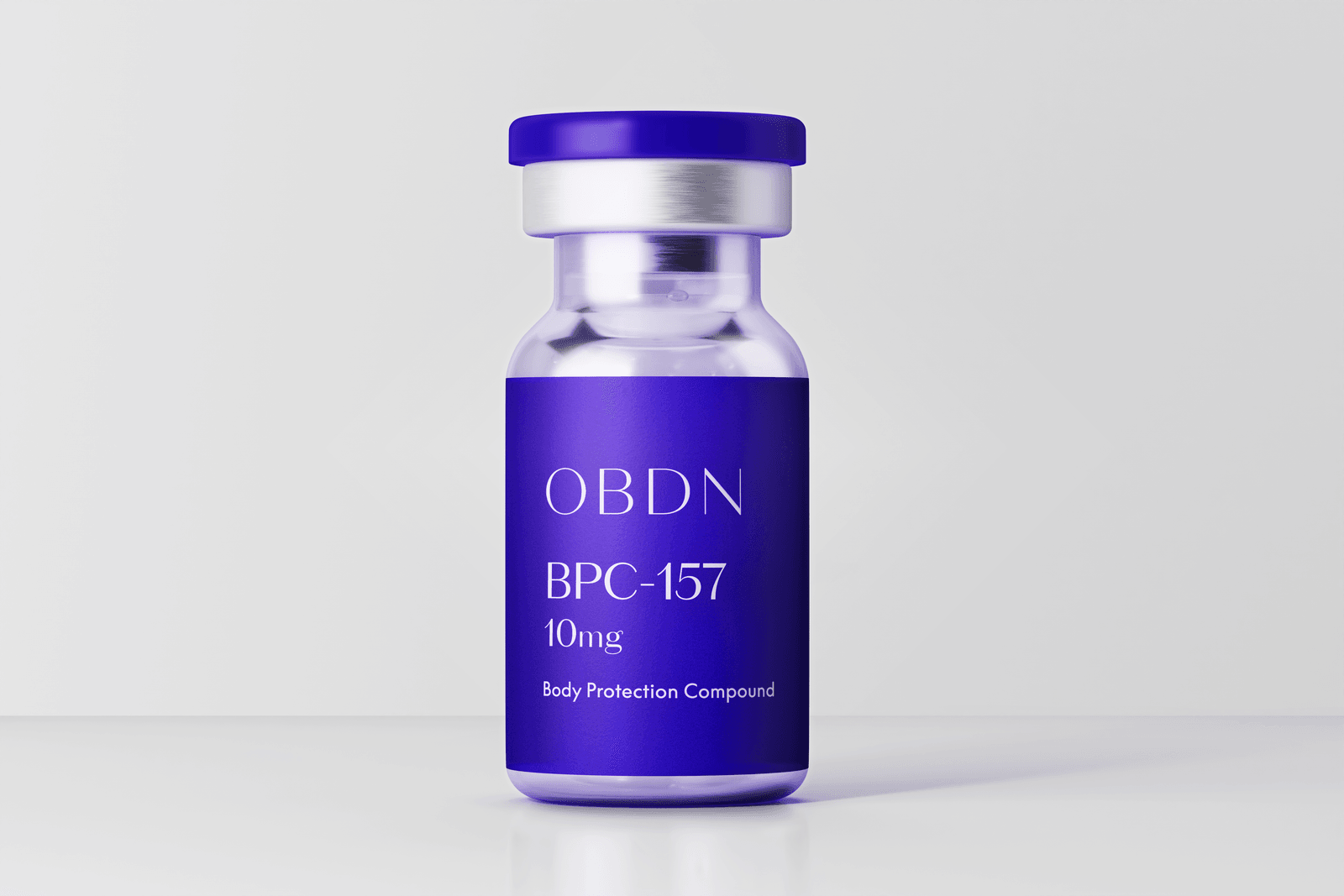
A 15-amino-acid fragment of a gastric protein that coordinates how injured tissue rebuilds — whether new vasculature forms, how cells migrate into the wound, and whether the result is functional tissue or disorganized scar.
Unlike most peptides, it remains stable in gastric acid for over 24 hours.
The signaling runs through nitric oxide and growth factor pathways that govern angiogenesis and epithelial repair.
Made in USA•Purity: 99% HPLC
Extensive preclinical tissue-repair data across multiple animal models; no large-scale human clinical trials published
For laboratory research use only.
BPC-157 survives gastric acid. Most peptides dissolve in minutes — this one remains intact for over 24 hours, which is why researchers have studied it as a tissue repair signal that works whether delivered orally or by injection.
The peptide coordinates multiple repair processes at once:
Blood vessel formation — new capillaries grow into damaged tissue Cell migration — fibroblasts move into injury sites and organize Inflammation resolution — cytokine cascades shift from alarm to repair Nerve regeneration — axons regrow, conduction velocities recover
In preclinical models, BPC-157 has been characterized across multiple tissue contexts. The mechanism involves nitric oxide regulation, angiogenic signaling through VEGFR2, and modulation of how cells attach and migrate during remodeling.
Gastrointestinal Protection
Multiple preclinical studies demonstrate protective effects against NSAID damage, alcohol, stress ulceration, and inflammatory bowel disease models. In IBD models, BPC-157 accelerated mucosal healing, reduced TNF-α, IL-1β, and IL-6, and restored barrier integrity. Tendon and Ligament Repair
In rat Achilles tendon models, BPC-157 increased biomechanical strength, organized collagen deposition, and improved tendon-to-bone integration. Similar effects in ligament injury models. One mechanistic finding: the peptide upregulated growth hormone receptor expression in tendon fibroblasts. Peripheral Nerve Injury
In sciatic nerve crush models, BPC-157 enhanced functional recovery, improved nerve conduction velocities, and accelerated architectural restoration. The neuroprotective effects coordinated with improved microvascular coupling between nerve and capillary beds.
BPC-157 has a robust preclinical evidence base. Human clinical data remain limited.
No large-scale controlled human trials have been published. The mechanisms have been characterized in cell culture and animal studies. A 2019 systematic review concluded that while preclinical safety profiles appear favorable, rigorous clinical trials are needed to establish human safety and efficacy.
For laboratory research use only.
| Amino Acid Sequence | Gly-Glu-Pro-Pro-Pro-Gly-Lys-Pro-Ala-Asp-Asp-Ala-Gly-Leu-Val |
|---|---|
| Single-Letter Code | GEPPPGKPADDAGLV |
| Molecular Formula | C62H98N16O22 |
| Molecular Weight | 1419.53 g/mol |
| Amino Acid Count | 15 |
| CAS Number | 137525-51-0 |
| PubChem CID | 9941957 |
| Origin | Synthetic pentadecapeptide derived from a fragment of Body Protection Compound (BPC) found in human gastric juice |
| Synonyms | Bepecin, PL-14736, PLD-116 |
This product ships as lyophilized (freeze-dried) powder. After reconstitution, the solution requires different storage conditions than the powder.
Do not freeze. Use within 30 days of mixing.